Vehicle Recovery From Snow and Ditches
Winch Outs in Buffalo for Vehicles Stuck in Mud, Snow, or Off-Road Positions
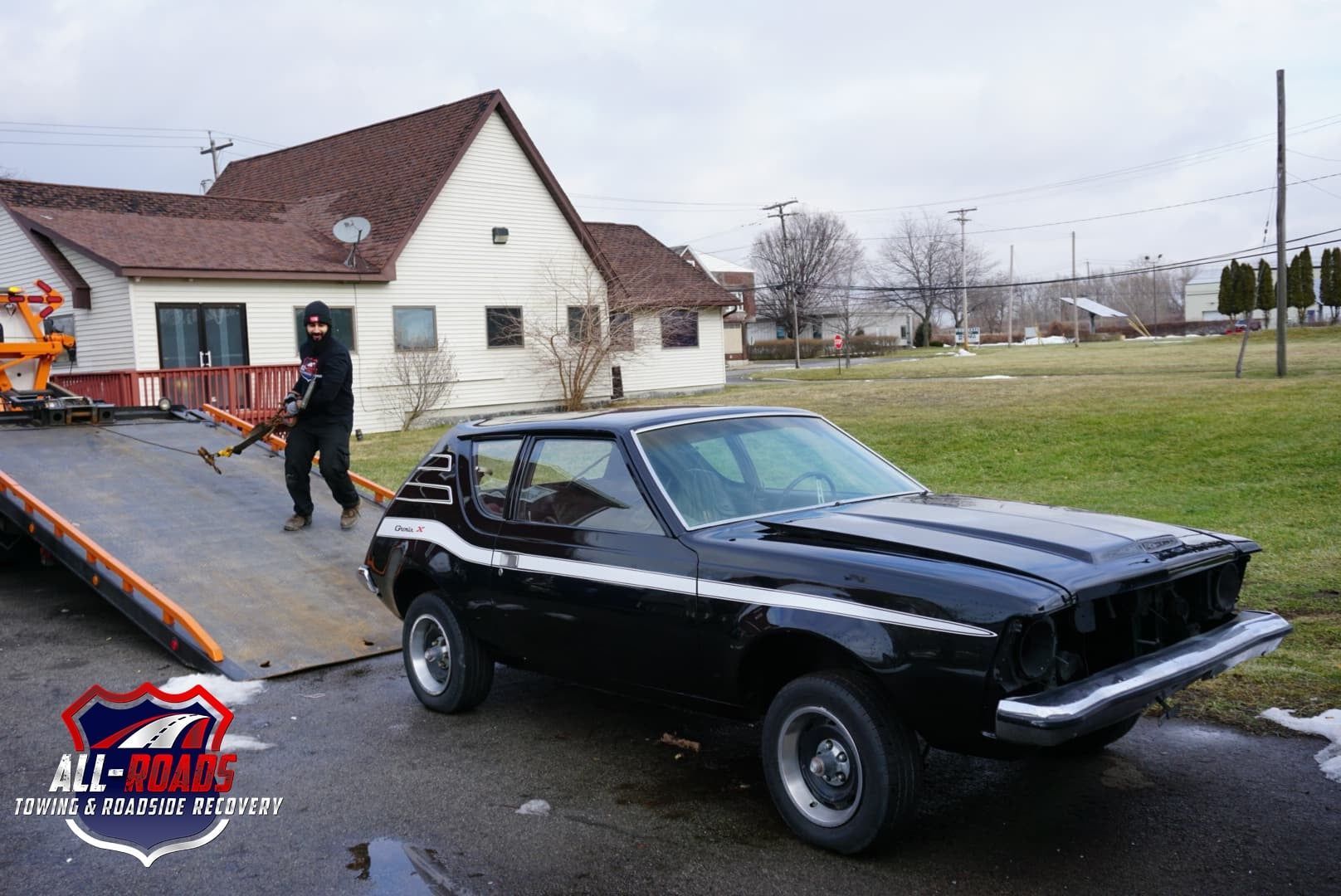
Severe winter weather in Buffalo creates conditions where vehicles slide off plowed roadways into snowbanks, sink into mud during spring thaw, or become high-centered on uneven terrain where ground clearance disappears. Epic Towing & Recovery uses winch equipment to pull vehicles back onto solid surfaces without requiring airlift or causing additional body damage during extraction. Steel cables or synthetic recovery straps connect to frame-mounted tow hooks or suspension attachment points, and the winch drum applies steady pulling force that overcomes resistance from packed snow, saturated soil, or ditch angles that prevent tires from gaining traction.
Winch operations involve anchoring the tow truck on stable ground, extending the cable to the stuck vehicle, and applying controlled tension that pulls the vehicle along its longitudinal axis without twisting the frame. Operators assess the angle of approach, potential obstacles like fence posts or drainage culverts, and whether the vehicle's undercarriage is grounded on debris that must be cleared before pulling begins. Recovery methods adjust based on whether the vehicle is nosed into a ditch, buried axle-deep in snow, or simply wheel-spinning on ice with no forward grip.
Request recovery assistance immediately to avoid prolonged exposure in freezing conditions or worsening the stuck position with repeated drive attempts.
Why Self-Recovery Attempts Often Fail
Drivers attempting to rock the vehicle back and forth or accelerate out of snow and mud typically worsen the situation by digging the tires deeper into the surface or overheating the transmission with prolonged slipping. Spinning tires melt snow into ice underneath, creating an even slicker surface, while repeated acceleration cycles in soft ground create ruts that trap the vehicle more firmly. Buffalo's lake-effect snowfall produces dense, heavy snow that packs tightly around wheel wells and underbody panels, increasing resistance beyond what tire traction alone can overcome even with momentum.
After winching, your vehicle sits back on solid pavement or compacted ground with tires fully contacting a stable surface. You'll see that body panels, bumpers, and undercarriage components remain intact without new dents or scrapes introduced during the pull. The vehicle moves under its own power again, with steering and drivetrain systems functioning normally and no fluids leaking from impacts that occurred while stuck.
Operators inspect for frame damage, suspension misalignment, or exhaust system impacts that may have occurred during the initial slide or high-centering event. If structural damage is detected, the vehicle may require towing instead of being driven away, even after successful extraction from the stuck position.
Questions Drivers Have About Winch Recovery
Vehicle owners commonly ask about recovery procedures and damage risks when they're stuck in difficult positions.
What vehicle points are used to attach the winch cable?
Factory tow hooks, frame rails, or suspension mounting points provide secure attachment, while operators avoid connecting to bumper covers, plastic fascia panels, or body components that will tear away under pulling force.
How does Buffalo's lake-effect snow change recovery difficulty?
Heavy, wet snow packs more densely than light powder, creating greater resistance and requiring more pulling force, and the unpredictable depth of snowdrifts means vehicles can sink deeper than drivers anticipate when leaving plowed surfaces.
When does a stuck vehicle require towing instead of just winching out?
If the vehicle sustained damage during the incident that makes it unsafe to drive, if mechanical components were compromised by impact, or if fluid leaks developed, towing to a repair facility becomes necessary even after extraction.
What should I avoid doing while stuck to prevent making recovery harder?
Stop accelerating once tires lose traction, don't dig around the wheels if you're in deep snow, and avoid turning the steering wheel sharply while stuck, as this increases resistance and can bend suspension components.
How long does winch recovery typically take?
Simple extractions from shallow snow or mud take 15 to 30 minutes, while vehicles buried deeply or positioned at severe angles require more time to set up anchoring, clear obstacles, and perform the pull without causing damage.
Epic Towing & Recovery responds to winch out requests throughout Buffalo when vehicles become stuck during winter storms or challenging road conditions. Call with your location and stuck position details to coordinate recovery equipment and timing.